Meal Prep & Clean Eating
A Healthy Outside Starts from the Inside

WHAT IS A HEALTHY DIET?
A healthy diet is one that includes all food groups, emphasizing fresh fruits and vegetables, whole grains, lean proteins, and healthy fats. Cleaning eating is eating whole foods that are home cooked to avoid excessive preservatives. It also involves planning meals in advance—whether it’s a few days’ worth of snacks or an entire week’s worth of breakfasts, lunches, dinners, and even desserts. Meal prep has become increasingly popular among people who work full-time jobs or just lead busy lives in general; to save time on evenings and weekends (plus money). A typical meal-prep day usually looks like a combination of chopping up vegetables and cooking protein at home while preparing single-serving containers ahead of time so that you can take your meals with you anywhere you go.
In general, a healthy diet is one that provides you with all the nutrients that you need in order to keep healthy. You see, everything you consume contains certain vitamins and minerals. Some foods are more nutritious than others, and these foods should be a bigger priority to foods that are high in saturated fats or refined sugars. For example, if you consumed snacks and candy that have little to no nutritional value, you'll likely experience the effects of nutritional deficiencies sooner than you think. If you've ever felt tired or moody without any cause, you've probably already experienced effects of nutritional deficiencies. Since every nutrient supports a different function in the body and their all codependent on each other, it's important to achieve a balance between all.
With over 30 nutrients needed by your body every day, you need to make sure to eat a variety of foods from different food groups:
01 GRAINS

Like any part of your diet, it’s important to eat a variety of grains. There are many to choose from, so try to
include all in your meals throughout the week.
Whole grains are rich in nutrients, high in fiber and low in calories. Aim for at least three servings per day. For maximum health benefits, select unrefined grains rather than refined ones—they have more fiber, vitamins and minerals.
Whole Grains: bulgur wheat, brown rice, whole-wheat pasta, millet and buckwheat kernels
02 FRUIT

Make fruits your main source of sugar. The best fruits to eat include berries, melons, bananas, papaya, kiwi and pineapple. If you are craving a sweet snack but don’t want to go overboard on sugar (and calories), opt for fruit instead of cookies or cakes. A lot of people think that eating an apple is enough fruit when they want a treat. The average apple has approximately 4 ounces of sugar in it! While that may not seem like a lot compared to candy bars or other sugary foods, it adds up quickly over time. Stick with 1-2 portions per day or less if you have blood-sugar issues.
03 MEAT, POULTRY AND FISH
The bulk of your diet should consist of lean proteins. Try to include fish, seafood, poultry, or white meat (such as chicken or turkey breast) with every meal. Choose smaller portions of red meat (beef, pork) and other highly processed meats as they contain large amounts of saturated fat. If you choose to eat red meat, be sure to choose lean cuts that are well-trimmed with very little visible fat. Shrimp is an excellent source of protein as well; it is quite nutritious and provides high amounts of certain nutrients, such as iodine, that aren't abundant in many other foods.
04 BEANS AND LEGUMES
Whether you’re vegetarian or not, beans are a great staple to add to your diet. They’re extremely healthy, very filling, and come in a variety of flavors that makes them easily accessible to anyone. The most common types of beans include black beans, pinto beans, garbanzo beans (also known as c
chickpeas), kidney beans, navy beans, soybeans (edamame), etc. Also, legumes are packed with protein which aids in keeping you full longer throughout the day. If you have trouble finding time to cook your own beans try using canned instead—they’re just as good for you!
05 VEGETABLES
Veggies are a great source of vitamins, minerals, fiber, and phytonutrients. But what counts as one serving? A serving of vegetables is: 1 serving equals 1 cup uncooked or 1/2 cooked Try to include 5 servings of vegetables a day.
06 NUTS,SEEDS,OILS, AND FATS
Nuts, seeds, oils, and fats are a great way to keep your hunger in check. The problem? They’re also calorie dense—which means one small handful can be high in calories.
For example, one ounce of cashews (about 12) has 154 calories or 1 tablespoon of sunflower oil has about 120. If you consume plenty of nuts, cook with lots of oil, you'll consume more than 800 calories before you know it.
Healthy fats should constitute approximately 1/3 of your healthy diet.
THE PERFECT PORTION SIZES

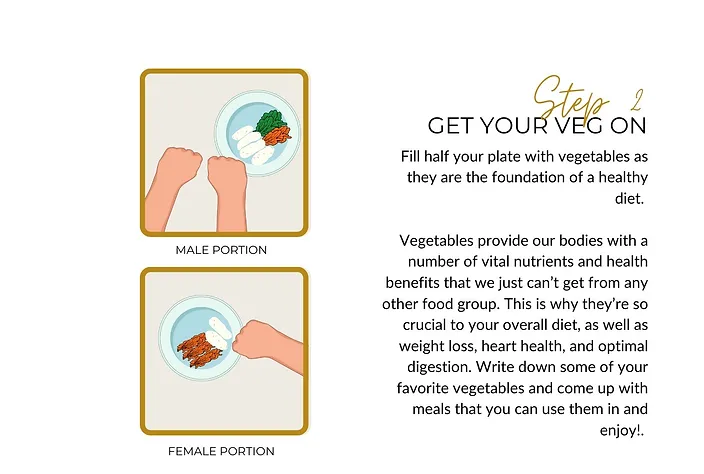
What you eat is only half the battle when it comes to achieving good nutrition. You also need to know how much to eat. Portions of food and drink have increased over time causing us to overeat. When we become aware of this, and if we have a guide to help us manage portion sizes, we can eat food in a healthy, balanced way; paying more attention to what we put into our systems.
One efficient, effective, and demonstrated method is the Hand Portion Method. The idea is that you aren't using tech to measure your food, but instead measuring it using your own hand. The hands go wherever you go. As a result, this makes them a good, quick and easy tool to measure portion sizes, even when you're eating out. The strategy outlined in this book is perfect for anyone who dislikes the idea of using food tracking apps and logs. The first step to starting something is to try each of the steps below.




MEAL PLANNING
TIPS & TRICKS
Tip 1
Take a look at the week ahead and decide which days/meals you will need to prepare.
Tip 2
Plan your meals and shopping for the week ahead using a weekly meal planner and shopping list.
Tip 3
Don't buy anything that's not on your shopping list when you go grocery shopping.
Tip 4
Prepare your meals and any other ingredients you need for the week ahead. I cook and prep on Sundays to prepare the work week.
Tip 5
Chop vegetables for meals and salads. Try a frittata recipe or overnight oats for a quick grab and go breakfast.
Tip 6
Prepared meals and ingredients should be stored in the fridge until needed.
Happy and healthy eating!
COPYRIGHT DISCLAIMER
Always consult your medical practitioner, registered dietician or nutritionist before making any
significant changes to your diet – particularly if you are an adolescent, pregnant, breastfeeding or have or develop a medical condition.
1
Tip
For added crunch, include a handful of toasted almonds or walnuts.
2
Variation
Substitute grilled shrimp or tofu for the chicken to make it vegetarian.
Notes


1
In a large bowl, combine the mixed greens, cherry tomatoes, avocado, chicken breast, eggs, blue cheese, turkey bacon, and green onions.
2
In a separate small bowl, whisk together the olive oil, red wine vinegar, Dijon mustard, and minced garlic until well combined. Season with salt and pepper to taste.
3
Drizzle the dressing over the salad ingredients and toss gently to combine, ensuring everything is well coated with the dressing.
4
Serve the salad immediately, or refrigerate up to 2 hours before serving for a fresh and vibrant dish.
Instructions
4 cups mixed greens (romaine, spinach, arugula)
1 cup cherry tomatoes, halved
1 avocado, sliced
1 cup cooked chicken breast, diced
2 hard-boiled eggs, chopped
1/4 cup blue cheese, crumbled
1/2 cup turkey bacon bits
2 tablespoons green onions, chopped
Salad Ingredients
1/4 cup extra-virgin olive oil
2 tablespoons red wine vinegar
1 tablespoon Dijon mustard
1 garlic clove, minced
Salt and pepper to taste
Dressing

Healthy Cobb Salad
Ole School Cook
Benita

This healthy Cobb salad is a delicious and nutritious twist on the classic recipe, incorporating fresh greens, lean proteins, and a zesty homemade dressing to satisfy your taste buds.
Servings :
4
Calories:
350
Prep Time
20 mins
Cook Time
None


Comments